The best educational flash cards match a child’s current learning goal, whether that is letter sounds, number sense, vocabulary, or emotional understanding. Compare hands-on sound-sorting cards with other educational flash-card formats, then choose what fits your home or classroom routine.
Quick Top Products
Educational Insights Hot Dots Phonics Fun Set
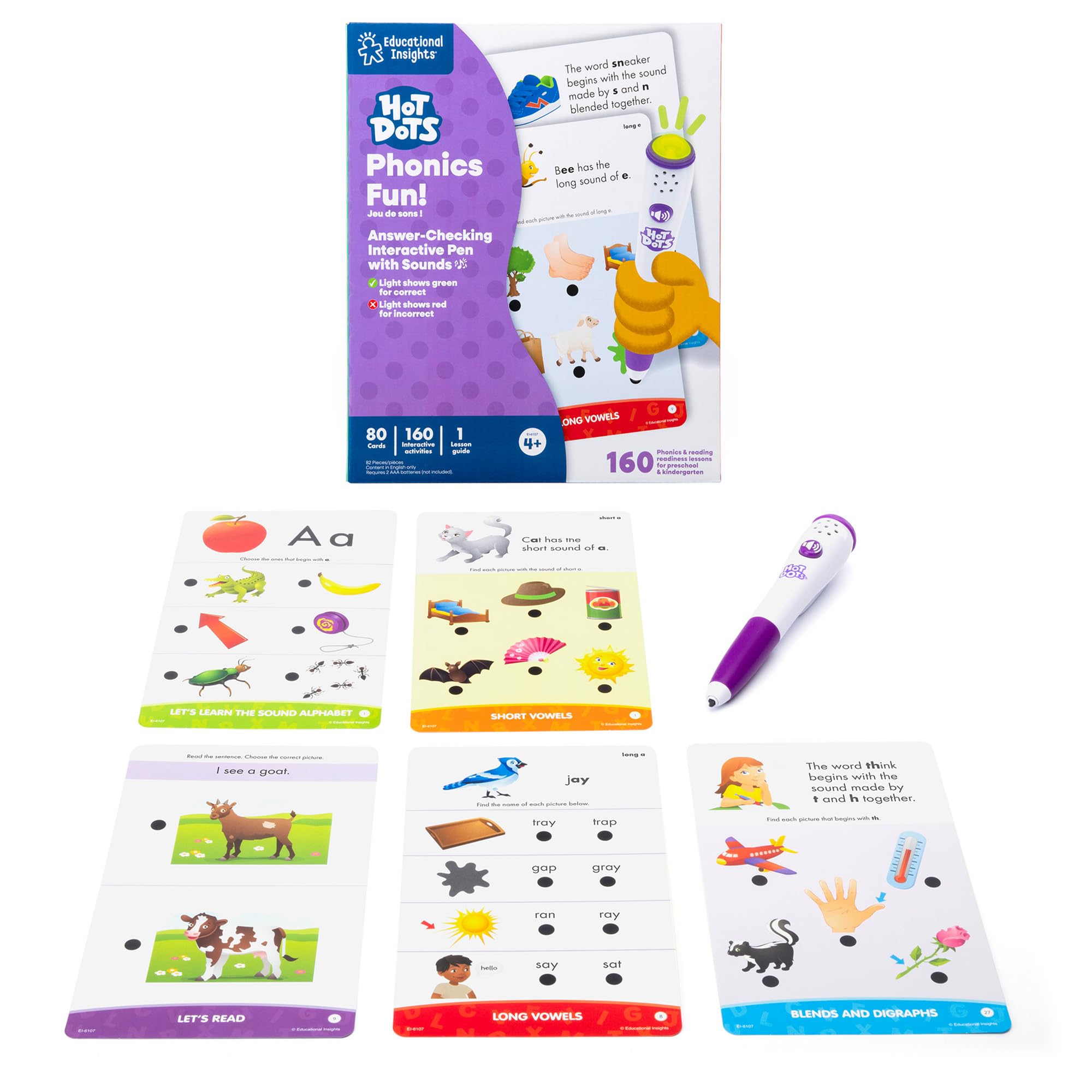
- Includes 80 double-sided cards with 160 activities.
- Covers letter sounds, vowels, blends, digraphs, and sight words.
- The pen gives visual and audio feedback and can be muted.
Best For: Preschoolers and kindergarteners practicing letter sounds, blends, and sight words with self-checking feedback.

hand2mind Alphabet Picture Mnemonic Cards
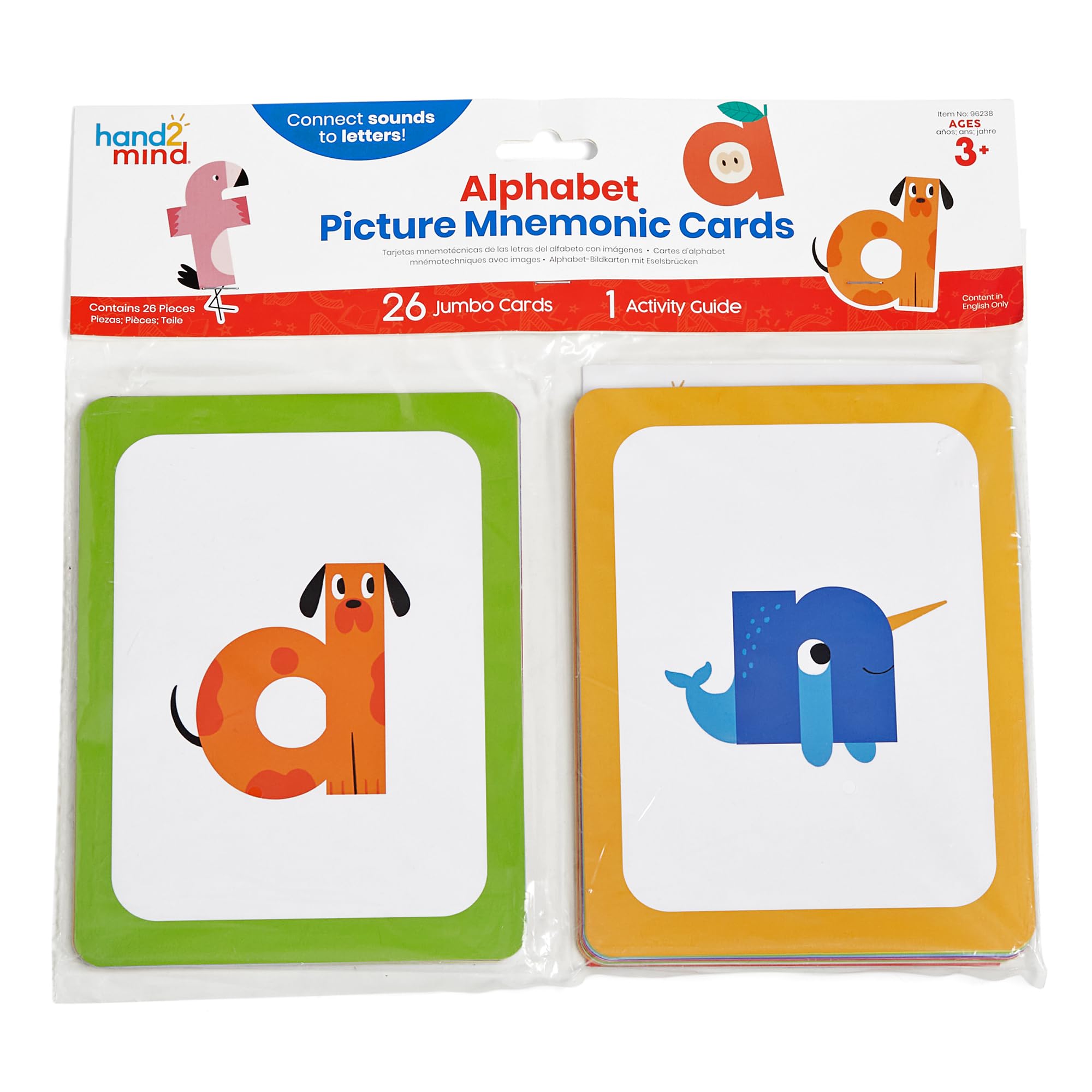
- Picture mnemonics link lowercase letter shapes to familiar images.
- The reverse side practices uppercase and lowercase letters.
- The set has 26 double-sided cards and an activity guide.
Best For: Young learners and classroom groups connecting letter shapes with sounds and familiar picture cues.
Mr. Pen Alphabet Flash Cards
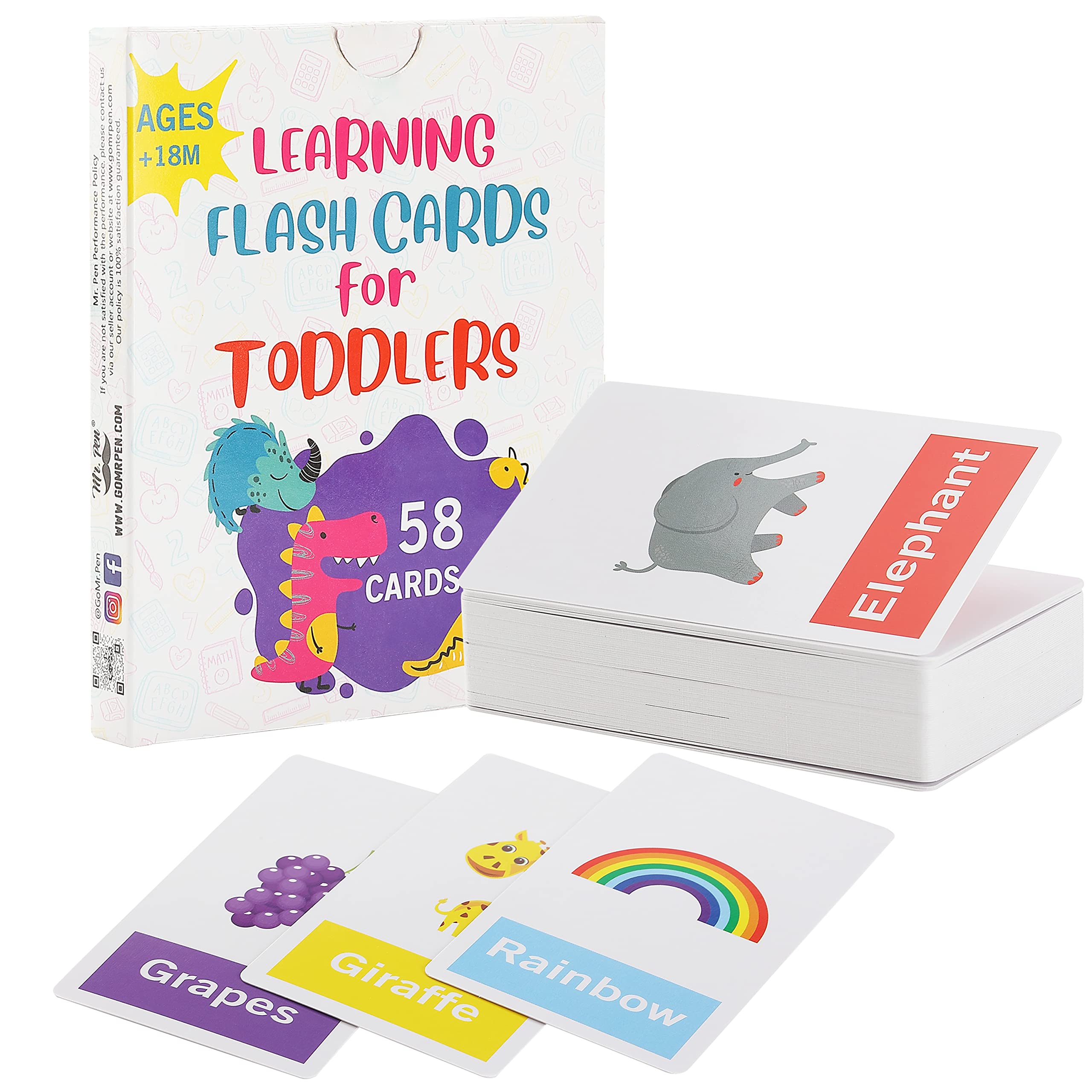
- Includes 58 alphabet picture cards with double-sided learning opportunities.
- Laminated cards are wipeable and designed to resist tearing or bending.
- Compact 4.2 x 2.5 inch cards are sized for tiny hands.
Best For: Toddlers who need simple, screen-free alphabet and picture practice with compact, wipeable cards.
Learning Resources Multiplication Master
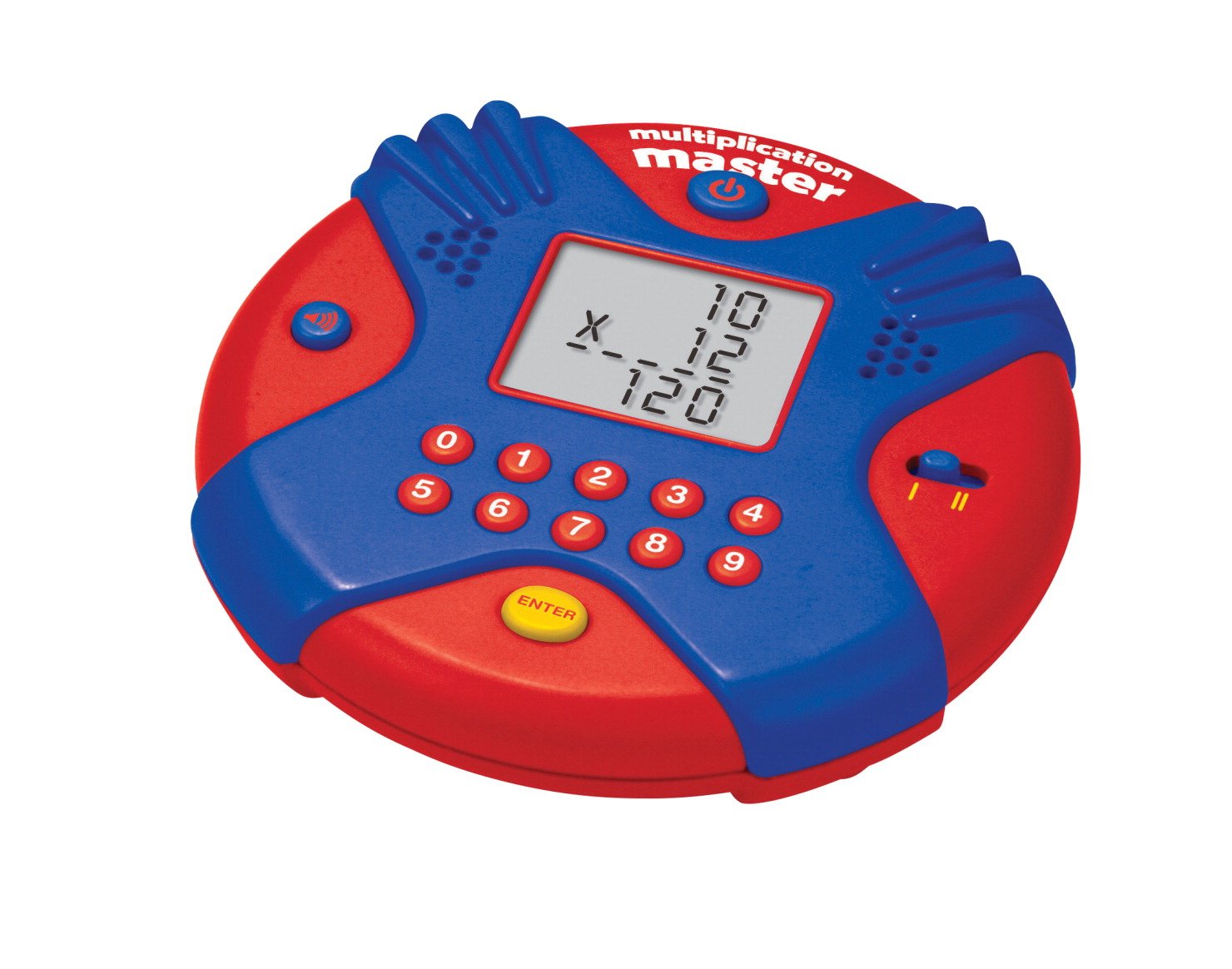
- Practices multiplication facts from 0 through 12.
- Includes two skill levels and timed or untimed modes.
- It is designed for ages 7 and up.
Best For: Children ages 7 and up building recall of multiplication facts through timed or untimed handheld practice.
Educational Insights Hot Dots Numbers & Counting Set
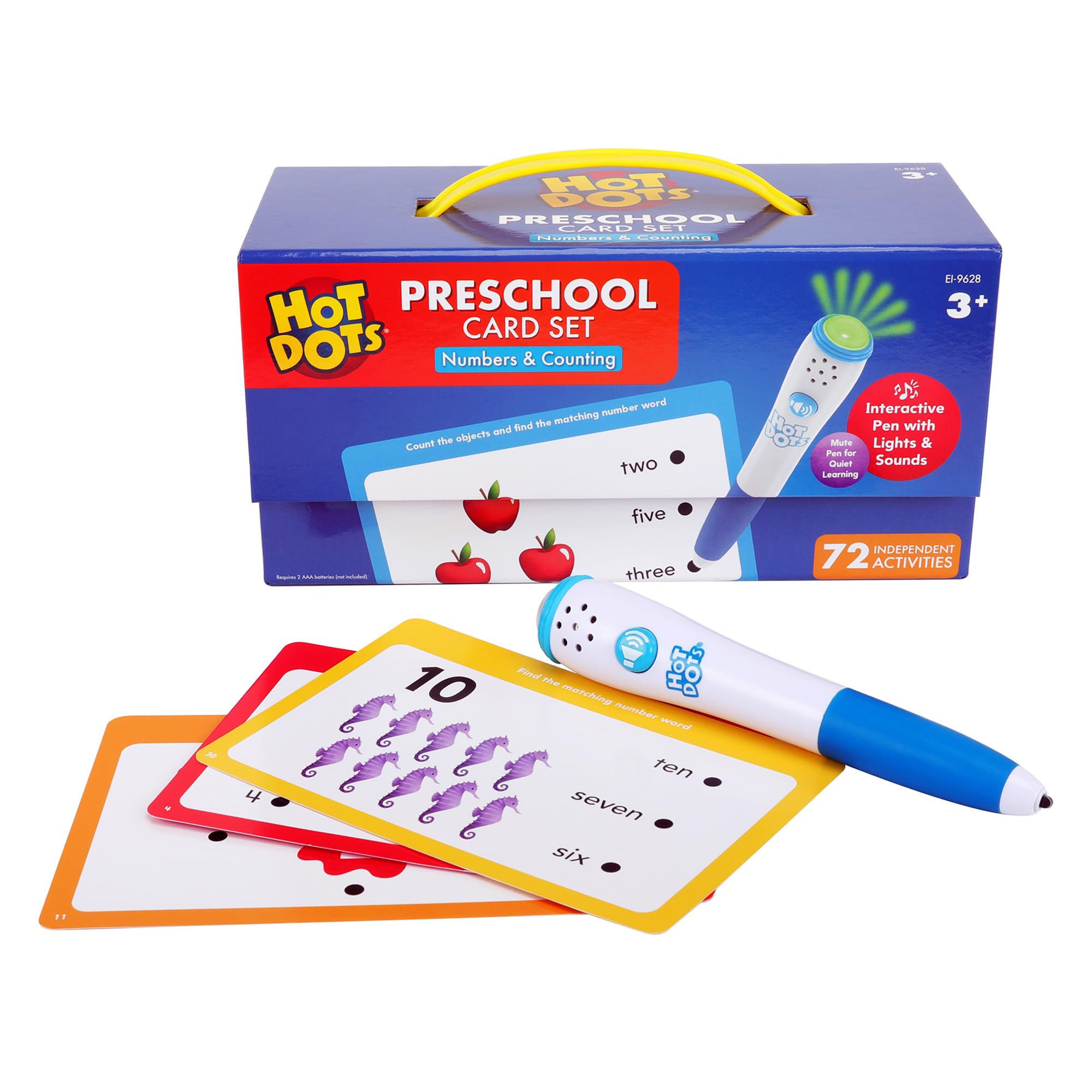
- Includes 36 double-sided cards with 72 activities and a storage case.
- Activities cover number recognition, number words, counting, and sequencing.
- The pen provides visual and audio feedback and can be muted.
Best For: Preschoolers ages 3–5 practicing number recognition, counting, number words, and sequencing.
Learning Resources Sight Word Stomp!
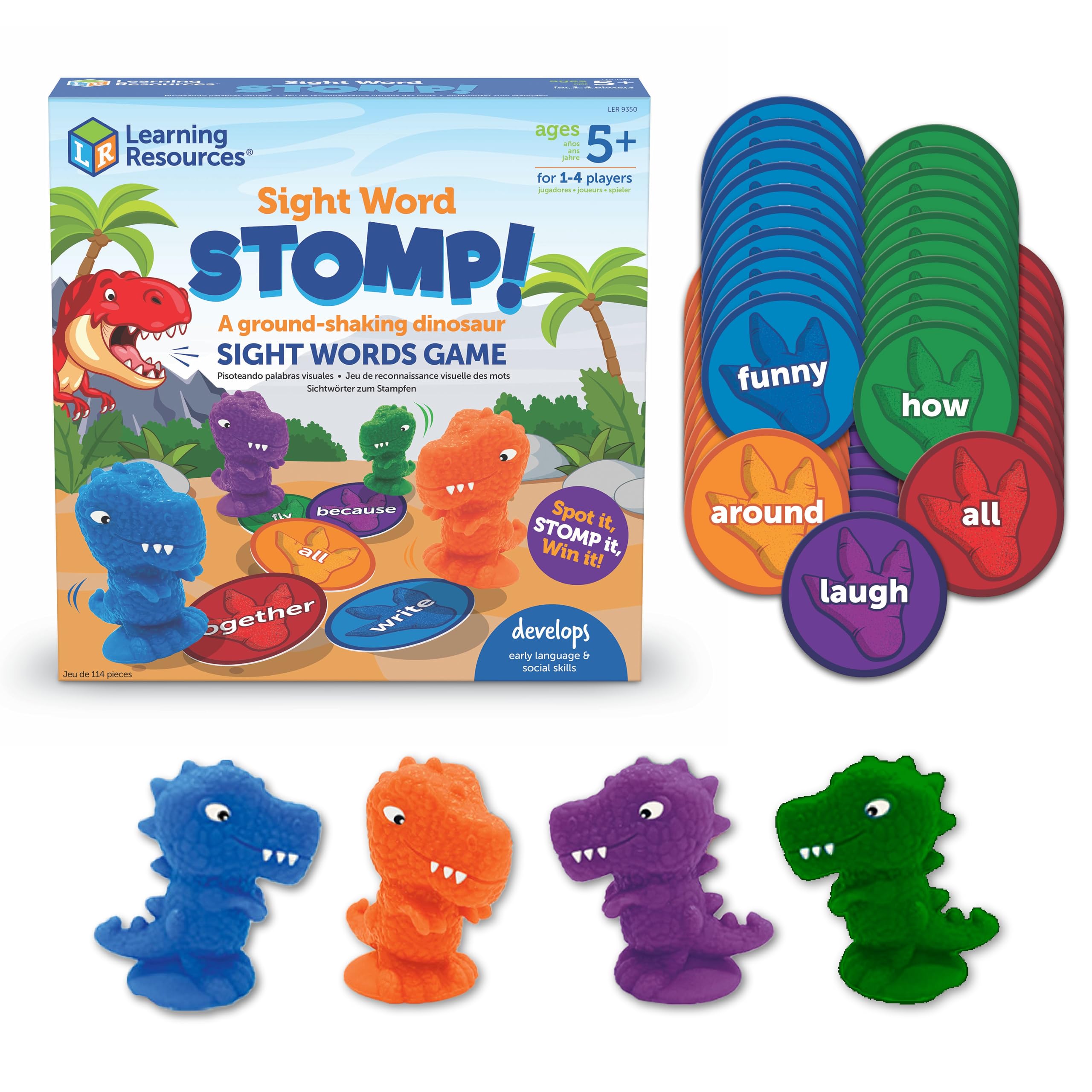
- Includes 110 double-sided cards with 220 sight words.
- Four dinosaur stompers suction to the word cards.
- The word cards are color-coded by difficulty from Pre-Primer to Third Grade.
Best For: Children ages 5 and up practicing sight words through active play at home, in classrooms, or in learning centers.
SkillEase Exploding Emotions Flashcards and Game
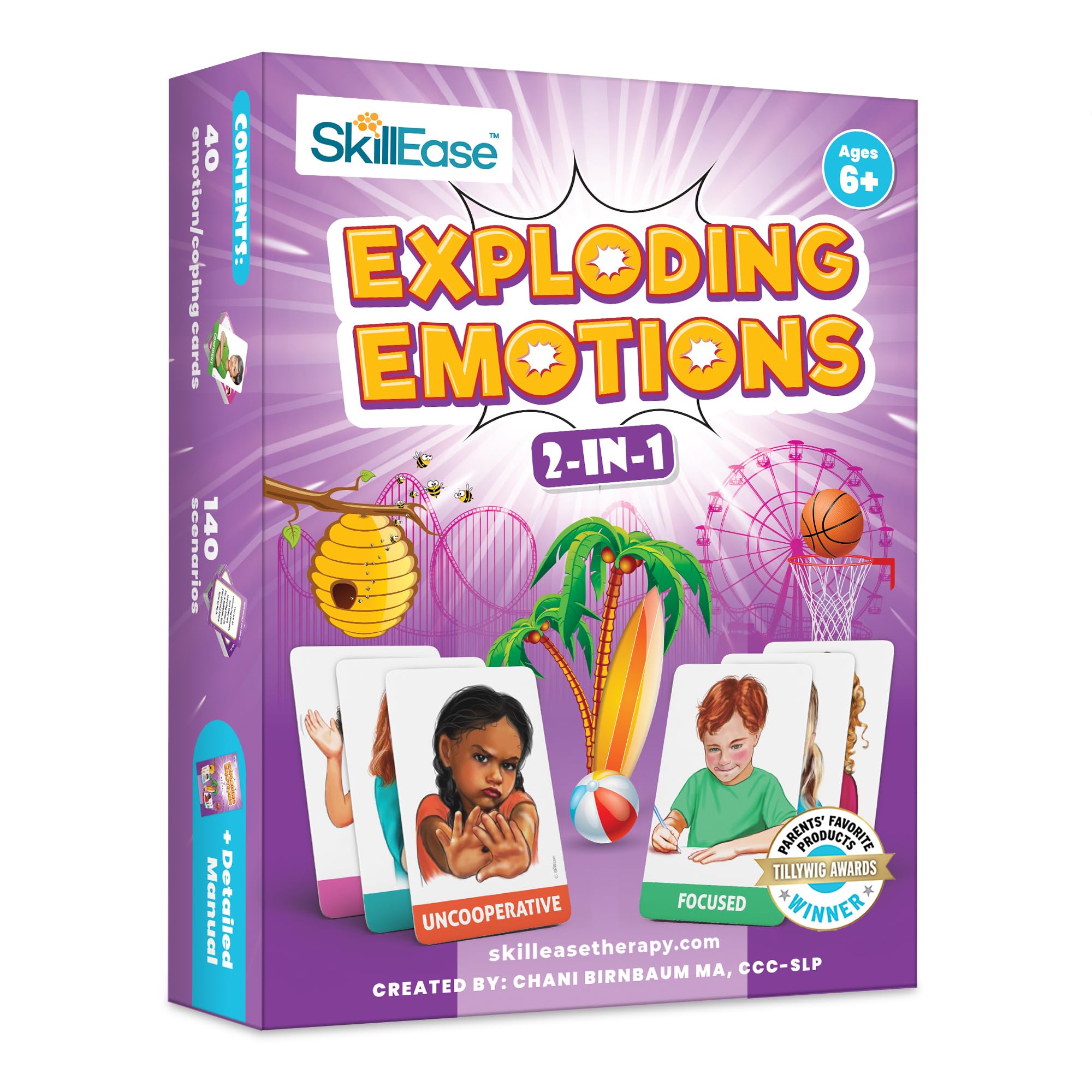
- Feeling cards pair real-life drawings with coping ideas.
- The box includes 140 scenarios for game play.
- The handbook covers empathy, perspective taking, problem solving, and facial recognition.
Best For: Families, educators, and support professionals opening conversations about feelings, coping strategies, and social skills.
Learning Resources Feelings & Emotions Puzzle Cards
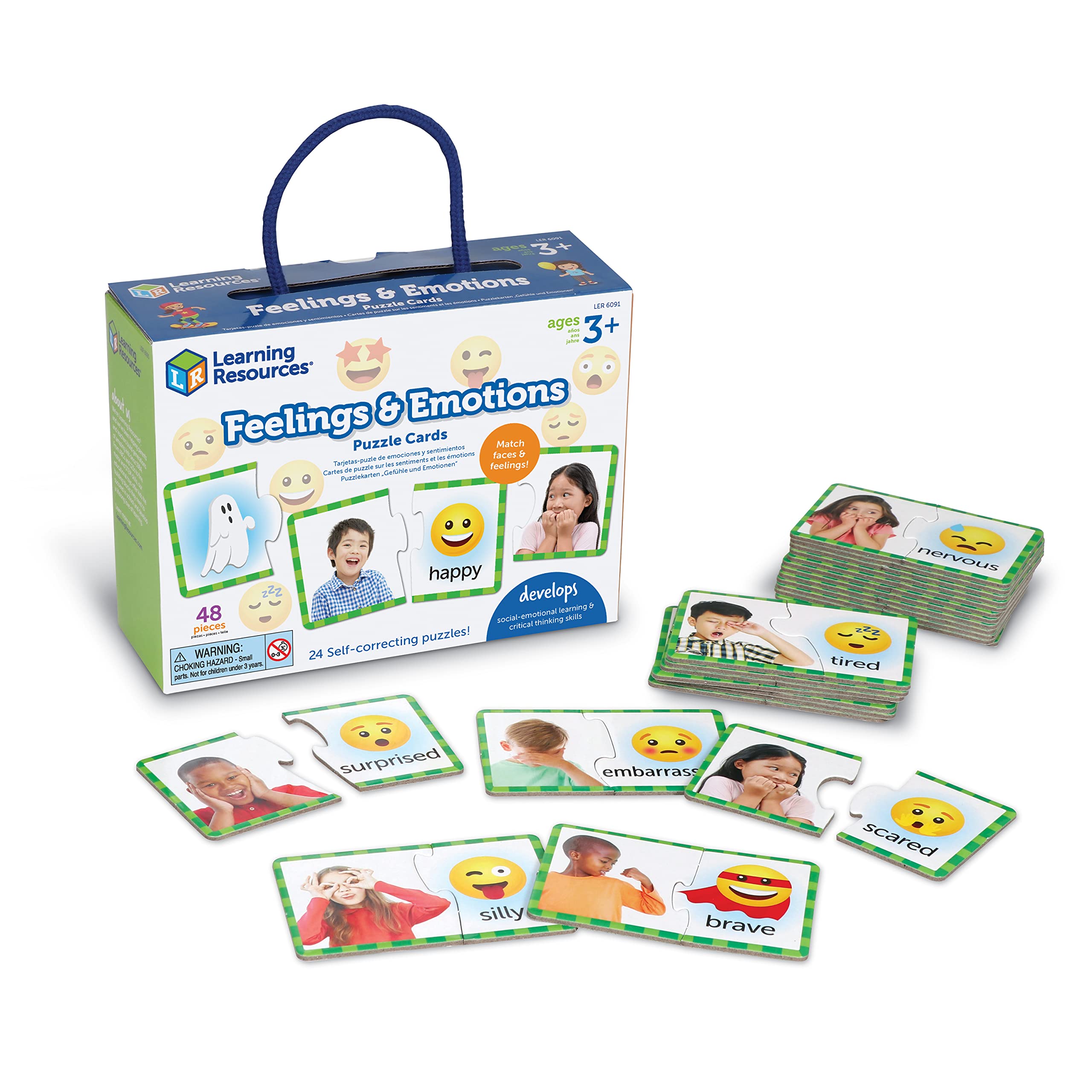
- Includes 24 double-sided puzzles with 48 pieces total.
- Unique puzzle shapes create one correct match.
- The set is intended for ages 3 and up.
Best For: Preschoolers ages 3 and up learning to connect feelings with real-life images through matching.
hand2mind Sort That Sound Activity Set
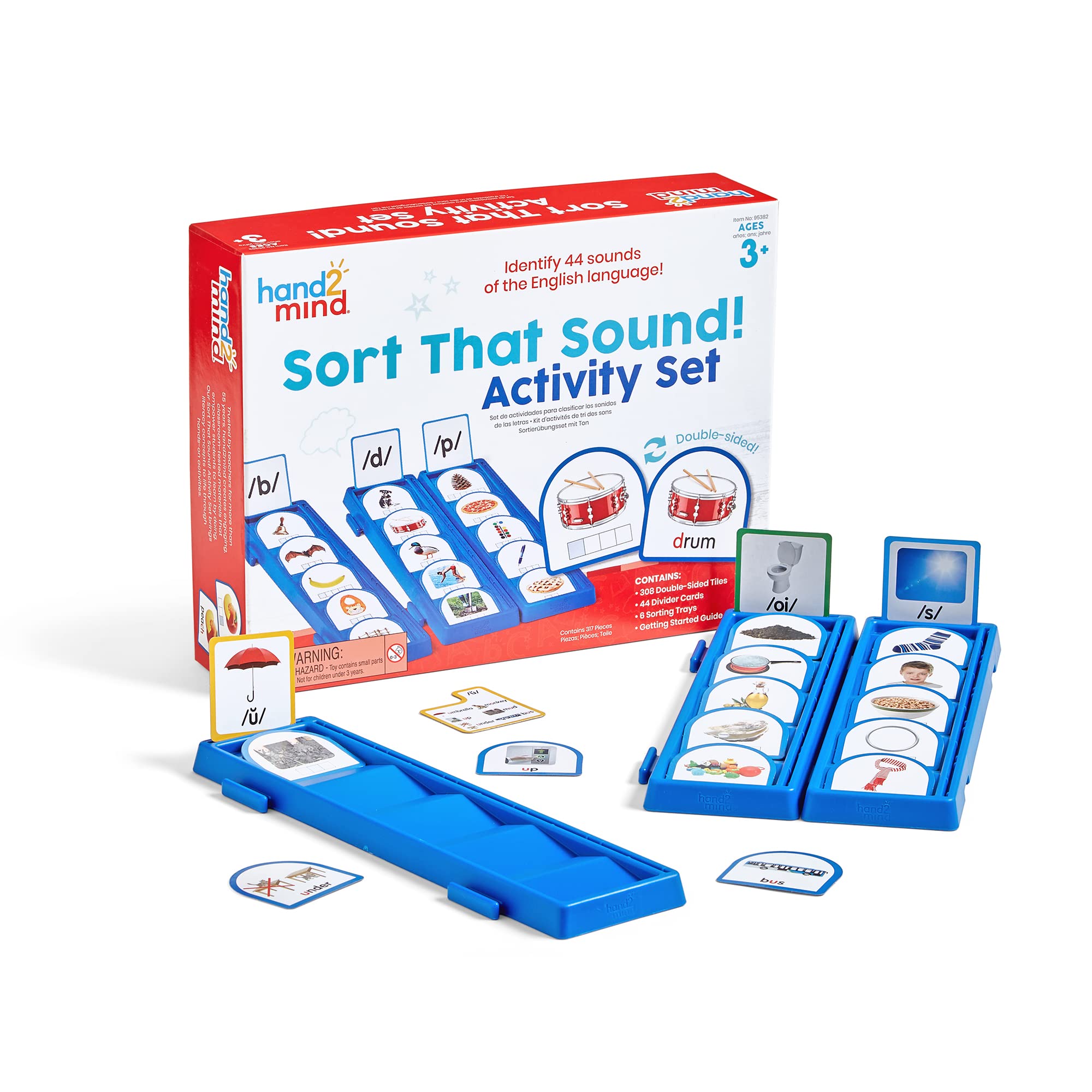
- Includes 44 sound tiles, 220 picture tiles, dividers, and six trays.
- Children sort picture tiles by matching their sounds to sound tiles.
- The sound tiles can also be used as flash cards.
Best For: Preschool and elementary learners sorting picture sounds to build phonemic awareness, including in ESL or speech practice.
AHJ Talking Flash Cards with 420 Words
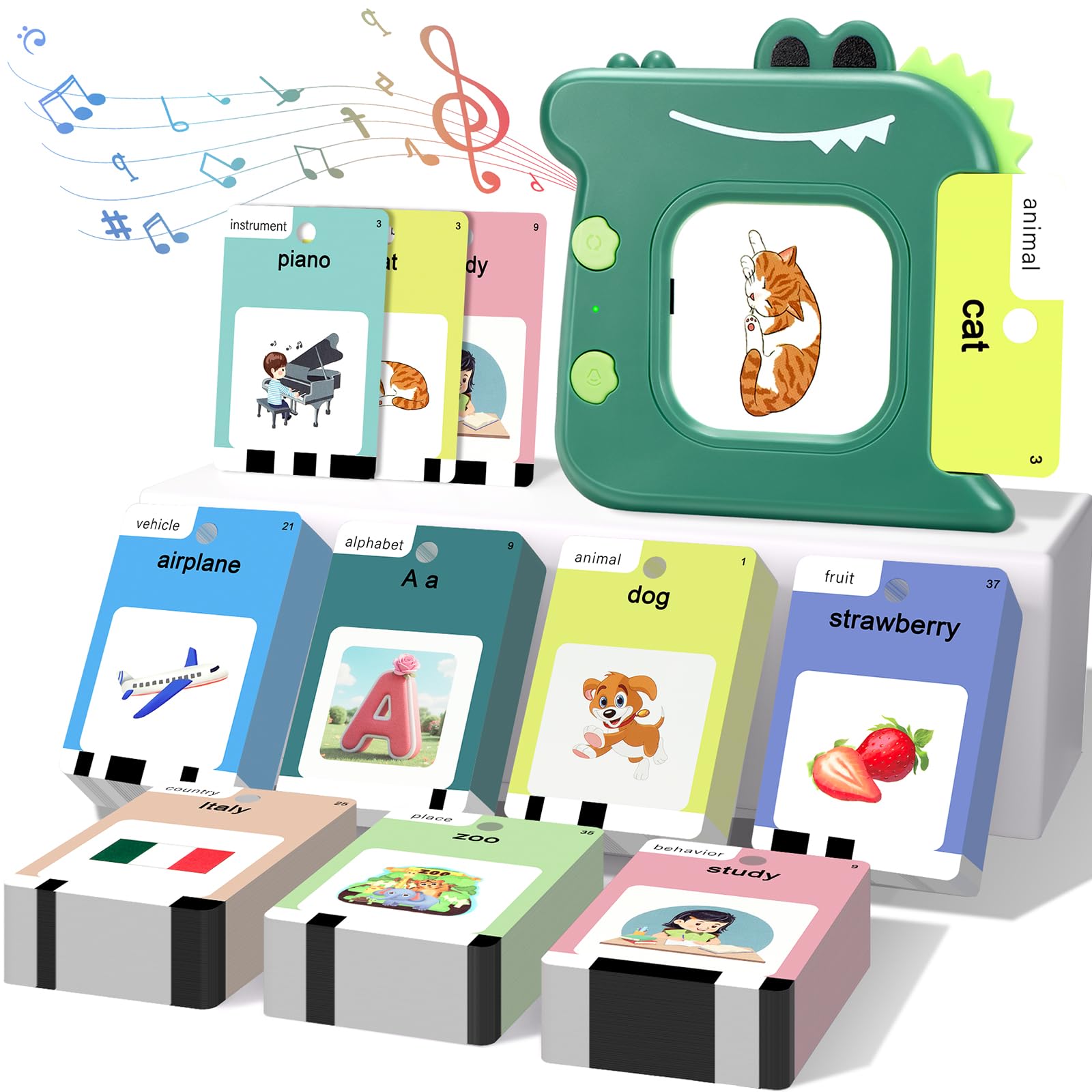
- Features 420 colorful illustrations across everyday learning topics.
- The reader has a repeat button and adjustable volume.
- The built-in rechargeable battery lasts up to 4.5 hours of continuous use.
Best For: Toddlers and young children exploring everyday vocabulary with a rechargeable audio reader and adjustable volume.
Independent Phonics Practice
Educational Insights Hot Dots Phonics Fun Set - Preschool and Kindergarten Flash Cards Compatible with Interactive Pen, Preschool Learning Activities, Learn to Read Activity for Kids Ages 3 and Up
Hot Dots Phonics Fun pairs 80 double-sided cards with an interactive pen, giving children 160 activities to work through at their own pace. The cards cover letter sounds, vowels, blends, digraphs, and sight words, so it can support several early reading skills in one set.
Pressing the pen to an answer dot gives immediate visual and audio feedback, and the sound can be muted. The self-checking format is useful for independent stations or home practice.
The pen needs 2 AAA batteries, which are not included, so plan to have those ready before handing it over.
Best For: Preschoolers and kindergarteners practicing letter sounds, blends, and sight words with self-checking feedback.
| Pros | Cons |
|---|---|
|
|
Choose this set when early reading practice needs to span more than alphabet recognition. Its 160 activities and immediate feedback make it a structured option for independent practice, while the mute setting gives caregivers more control over sound.
Before buying, check that the child is ready to use answer dots and that you have 2 AAA batteries. If your main goal is number practice or vocabulary exposure, a dedicated math or language set may be a closer fit.
Large-Format Alphabet Mnemonics
hand2mind Alphabet Picture Mnemonic Cards, ABC Flashcards for Kids, Classroom Alphabet Cards, Early Learning Flash Cards, Letter Recognition, Montessori Alphabet Cards, Toddler Learning Activities
These alphabet cards connect lowercase letter shapes with embedded picture mnemonics that cue each letter’s sound. The reverse side adds uppercase and lowercase practice, giving an adult a simple way to move from sound association into letter recognition.
At 6 x 8 inches, the cards are sized for classroom displays and group visibility as well as one-on-one use. The set includes 26 double-sided cards and an activity guide with letter recognition, phonics, and word-building activities.
This is a focused alphabet tool rather than a broad reading deck, so it suits learners building foundational letter and sound awareness.
Best For: Young learners and classroom groups connecting letter shapes with sounds and familiar picture cues.
| Pros | Cons |
|---|---|
|
|
This is a good match when letter sounds and visual association are the priority, especially for a small group or display where larger cards help visibility. The two-sided format adds uppercase and lowercase review, while the guide suggests activities for extending practice.
It is a 26-card alphabet set, so check whether the child also needs broader phonics topics such as blends or sight words; those are not part of the described card scope.
Wipe-Clean Toddler Alphabet Deck
Mr. Pen- Alphabet Flash Cards for Toddlers, Double-Sided, 58 Picture Cards | Toddler Flash Cards, Alphabet Flash Cards, Baby Flash Cards, Letter Flash Cards, ABC Flash Cards, Number Flash Cards
Mr. Pen’s deck contains 58 double-sided picture cards for early alphabet practice and related activities such as counting, colors, patterns, and classifying. Each card measures 4.2 x 2.5 inches, a compact format intended for small hands.
The cards have thick lamination and waterproof films, so they can be wiped clean after use. This is a straightforward physical deck without an electronic reader or game mechanism, making it suitable for adult-led naming and sorting routines.
Its broad activity potential comes from the picture cards rather than a detailed curriculum, so it works best when an adult will guide the practice.
Best For: Toddlers who need simple, screen-free alphabet and picture practice with compact, wipeable cards.
| Pros | Cons |
|---|---|
|
|
Choose this deck for flexible, adult-led practice with toddlers who benefit from small, tangible cards. Its wipeable finish and mix of picture concepts make it practical for repeated naming, sorting, and color or number activities.
It does not offer audio or built-in answer checking, so an adult supplies feedback and structure. Check how you will store the cards, since a box or ring is not specified.
Timed Multiplication Drills
Learning Resources Multiplication Master Electronic Flash Card, Math Skills, Varying Skill Levels, Ages 7+
Multiplication Master turns multiplication practice into a handheld electronic drill covering numbers 0 through 12. It offers two skill levels and both timed and untimed modes, so a learner can practice recall at a chosen pace or try a 60-second challenge.
The vertical problem format keeps the focus on multiplication rather than mixing several operations. Sound effects add an electronic game element, while the compact 4.5-inch diameter makes it easy to hold.
It requires 3 AAA batteries, not included, and is intended for ages 7 and up.
Best For: Children ages 7 and up building recall of multiplication facts through timed or untimed handheld practice.
| Pros | Cons |
|---|---|
|
|
This option is suited to a learner who already recognizes multiplication facts and wants focused recall practice. Timed and untimed modes give flexibility, and the two levels allow some adjustment without expanding into other operations.
It is a specialized electronic device, not a general math card set, so check that multiplication is the current target. Factor in the need for 3 AAA batteries before use.
Self-Checking Number Activities
Educational Insights Hot Dots Numbers & Counting Set - Preschool Learning Activities, Interactive Math Flash Cards for Toddlers 3-5 Years, Kindergarten Classroom Must Haves & Homeschool Essentials
This preschool math set contains 36 double-sided number cards with 72 activities, an interactive pen, and a handled storage case. It focuses on number recognition, number words, counting, and sequencing, with the pen providing immediate visual and audio feedback when a child selects an answer dot.
The pen can be muted, which helps adapt the activity for quieter settings. It supports self-paced work at home or in a classroom.
The pen requires 2 AAA batteries that are not included, so caregivers should account for that small setup step.
Best For: Preschoolers ages 3–5 practicing number recognition, counting, number words, and sequencing.
| Pros | Cons |
|---|---|
|
|
Pick this set when a preschooler is ready to practice several foundational math concepts with answer feedback. Its storage case is useful for moving the cards between home and classroom, and muting the pen gives some flexibility around sound.
The age focus is 3–5, so check fit against the child’s current skills. If multiplication fluency is the goal, a focused older-child math device will be more directly targeted.
Play-Based Sight Word Review
Learning Resources Sight Word Stomp! - Alphabet Toys, Phonics Flash Cards, Classroom Board Games, ABC Homeschool, Reading Manipulatives, Gifts for Boys and Girls, Visual Vocabulary
Sight Word Stomp! turns reading review into a movement-based game with four colorful dinosaur stompers that suction to word cards. The set includes 110 double-sided cards featuring 220 sight words color-coded from Pre-Primer through Third Grade.
The stompers add an active choice-and-match element that can make group or family practice more playful than flipping through a deck alone. The cards are designed for classroom, homeschool, RTI, and learning-center use, with multiple ways to play.
It is best suited to sight-word recognition rather than teaching the full range of phonics concepts.
Best For: Children ages 5 and up practicing sight words through active play at home, in classrooms, or in learning centers.
| Pros | Cons |
|---|---|
|
|
Choose Sight Word Stomp! for children who know some early reading basics and need repeated sight-word review with a playful group format. The graded color coding helps an adult select a level, while the dinosaur pieces bring a tactile action to each turn.
It is a sight-word game, so check whether the child also needs letter-sound instruction or a more structured phonics sequence. The cards and stompers are the core activity rather than a general reference deck.
Social-Emotional Conversation Cards
SkillEase Exploding Emotions Flashcards and Game: 2 in 1, Hilarious Family Fun, Social Emotional Learning, Feeling Cards for Kids, Teaches Social Skills, Autism
Exploding Emotions combines feeling cards with a scenario-based game. The cards show real-life drawings of emotions, and the backs include coping ideas created by a speech therapist.
The box also contains 140 scenarios for a family game, plus a handbook covering empathy, perspective taking, problem solving, social skills, and facial recognition. The materials can be used with younger children for feelings practice or with older children for game play and coping techniques.
This is a targeted social-emotional learning resource, so it makes most sense when the goal is discussing feelings rather than memorizing academic facts.
Best For: Families, educators, and support professionals opening conversations about feelings, coping strategies, and social skills.
| Pros | Cons |
|---|---|
|
|
This set fits adults who want a prompt for emotional vocabulary and guided discussion, with a game option for older children or groups. Its coping ideas and handbook distinguish it from academic flash cards and make it more useful for conversation than rote recall.
Check the child’s comfort with scenario-based discussion and whether the activity suits the setting. The number of feeling cards is not specified, so review the package contents if deck size matters.
Match-and-Learn Emotion Puzzles
Learning Resources Feelings & Emotions Puzzle Cards - SEL, Emotional Regulation Tools for Kids, Toddlers Calming Corners, Montessori Essentials, Matching Games, Flash Cards, Homeschool, Preschool
These puzzle cards introduce emotional awareness through image matching. The set has 24 double-sided puzzles, or 48 pieces total, with colorful illustrations intended to help preschoolers engage with feelings.
Each puzzle has a unique shape that permits one correct match, adding a problem-solving element to recognizing emotions. The cards are aimed at use at home, in classrooms, or for homeschool activities, and can support adults guiding an early conversation about feelings.
They differ from conventional question-and-answer flash cards, so consider whether a child is ready to handle matching pieces.
Best For: Preschoolers ages 3 and up learning to connect feelings with real-life images through matching.
| Pros | Cons |
|---|---|
|
|
Choose these cards when a young learner benefits from a matching task instead of verbal recall alone. The unique puzzle shapes provide a built-in way to check a match, while the real-life images support an adult-led discussion of feelings.
They are a narrow social-emotional resource rather than a general academic deck. Check whether puzzle matching suits the child’s current fine-motor and attention skills, and confirm that the emotions covered meet your teaching goal.
Hands-On Sound Sorting Activity Set
hand2mind Sort that Sound Activity Set, Phonemic Awareness, Ages 3+
Sort That Sound is a phonemic awareness activity set that can also be used for phonics flash cards. It includes 44 double-sided sound tiles, 220 double-sided picture tiles, 44 dividers, three NO tiles, and six sorting trays.
Children match the sounds depicted in the picture tiles with the correct sound tiles using the trays. The set helps build phonemic awareness and covers 44 sounds of the English language.
It is intended for phonics practice, ESL teaching materials, or speech therapy settings. Its multiple trays and components suit a table activity, but check that you have room to set up and store the pieces.
Best For: Preschool and elementary learners sorting picture sounds to build phonemic awareness, including in ESL or speech practice.
| Pros | Cons |
|---|---|
|
|
Pick this set when sound sorting and phonemic awareness are the goal, especially for guided small-group or table activities. The picture tiles give children examples to classify, while sound tiles can be repurposed as flash cards.
It includes substantially more components than a simple deck, so consider available activity space and storage. Check that the learner is ready to match spoken sounds with pictured words; this is an interactive sorting resource rather than passive review.
Broad Early Vocabulary With Audio
Talking Flash Cards for Toddlers 1 2 3 4 5 6 Year Olds, 420 Sight Words, Montessori Toys to Learning, Pocket Speech Therapy Toys for Toddlers, Sensory Preschool Educational Birthday
This talking-card set combines 420 colorful illustrations with a reader that speaks words aloud and plays realistic animal and vehicle sounds. The topics span letters, numbers, time, animals, transportation, food, clothing, nature, people, professions, household items, and shapes, offering broad early vocabulary exposure.
A repeat button and adjustable volume give caregivers control over pacing and sound. The rechargeable reader is described as lasting up to 4.5 hours of continuous use, and the screen-free format keeps the activity centered on cards.
The package count of physical cards is not specified, so check whether that detail matters for storage or planning.
Best For: Toddlers and young children exploring everyday vocabulary with a rechargeable audio reader and adjustable volume.
| Pros | Cons |
|---|---|
|
|
Choose this reader set when a child is motivated by spoken prompts and a wide range of everyday vocabulary. The repeat and volume controls are practical for short sessions, while the rechargeable format supports use away from a screen.
It is less suited to quiet settings than a silent physical deck, even with adjustable volume. Before buying, check the physical card count and confirm that the reader’s audio format fits the child’s language-learning needs.
How to Choose Educational Flash Cards
How We Picked Educational Flash Cards
This selection favors products with a clear learning purpose and a usable format: early letter and sound recognition, phonics, sight-word review, number practice, vocabulary, or emotional learning. It includes classic picture decks, large display cards, answer-checking pen activities, sorting manipulatives, a game, and an audio reader so families and educators can match the format to how a child learns.
The strongest fits explain what skills or topics the cards cover and how a child uses them. We also looked for practical details such as age guidance, card count, feedback style, sound controls, portability, or a storage case when those details were supplied.
Several language-specific reader sets share one basic format, so this guide selects examples with different learning purposes rather than filling the list with near-identical variants.
Comparing Educational Flash Cards
Start with the target skill. Alphabet mnemonic cards and the Mr. Pen deck support early letter recognition, while Hot Dots Phonics Fun spans letter sounds, vowels, blends, digraphs, and sight words.
Sort That Sound adds picture-based sound sorting, and Sight Word Stomp! focuses on repeated recognition through a group game.
For math, the Hot Dots number set targets preschool counting and sequencing with self-checking feedback; Multiplication Master is a focused electronic drill for multiplication recall. The emotion puzzle cards and Exploding Emotions set address feelings and social skills rather than academic facts.
Talking cards add spoken vocabulary prompts, but require an audio reader and are more active than a quiet physical deck. The coordinator inserts a comparison table here.
| Product | Standout features | Best for |
|---|---|---|
| Educational Insights Hot Dots Phonics Fun SetCheck Price |
| Preschoolers and kindergarteners practicing letter sounds, blends, and sight words with self-checking feedback. |
| hand2mind Alphabet Picture Mnemonic CardsCheck Price |
| Young learners and classroom groups connecting letter shapes with sounds and familiar picture cues. |
| Mr. Pen Alphabet Flash CardsCheck Price |
| Toddlers who need simple, screen-free alphabet and picture practice with compact, wipeable cards. |
| Learning Resources Multiplication MasterCheck Price |
| Children ages 7 and up building recall of multiplication facts through timed or untimed handheld practice. |
| Educational Insights Hot Dots Numbers & Counting SetCheck Price |
| Preschoolers ages 3–5 practicing number recognition, counting, number words, and sequencing. |
| Learning Resources Sight Word Stomp!Check Price |
| Children ages 5 and up practicing sight words through active play at home, in classrooms, or in learning centers. |
| SkillEase Exploding Emotions Flashcards and GameCheck Price |
| Families, educators, and support professionals opening conversations about feelings, coping strategies, and social skills. |
| Learning Resources Feelings & Emotions Puzzle CardsCheck Price |
| Preschoolers ages 3 and up learning to connect feelings with real-life images through matching. |
| hand2mind Sort That Sound Activity SetCheck Price |
| Preschool and elementary learners sorting picture sounds to build phonemic awareness, including in ESL or speech practice. |
| AHJ Talking Flash Cards with 420 WordsCheck Price |
| Toddlers and young children exploring everyday vocabulary with a rechargeable audio reader and adjustable volume. |
Choosing Cards for Phonics and Early Reading
Consider how much guidance a learner needs. A picture mnemonic can help an adult introduce one letter-sound link at a time, while a self-checking pen gives children immediate feedback during independent activities.
For phonemic awareness, the Sort That Sound trays ask children to classify picture tiles by sound, which suits a guided table activity more than quick review on the go.
Sight-word practice benefits from repeated, varied turns. Sight Word Stomp! brings movement and a color-coded progression; Hot Dots Phonics Fun gives a quieter route through broader early reading topics, with its audio muted when needed.
Check whether the child is practicing recognition, sound formation, or spelling, since those are related but different goals.
Finding the Right Math or Vocabulary Cards
For preschool math, look for the concepts the child is learning now. The Hot Dots number activities combine number words, recognition, counting, and sequencing.
Multiplication Master is narrower and better aligned with multiplication fact recall. Electronic formats need batteries, and those are not included with these pen or handheld options.
For early vocabulary, compare the language and playback experience. The AHJ 420-word reader covers many everyday topics and has repeat and volume controls.
A bilingual reader can be useful when the household wants practice across two languages, but verify the language mode and card set before choosing among similar versions. Physical alphabet cards are better when you want an adult to lead naming and sorting without audio.
Who Should Buy Which Educational Flash Cards?
Choose picture alphabet cards for a toddler beginning letter and sound recognition, and larger mnemonic cards when visibility in a group matters. Pick an answer-checking pen set for self-paced practice, with the phonics or number version matched to the child’s current lesson.
Choose Sort That Sound for hands-on phonemic awareness. Its set includes sound tiles, picture tiles, dividers, and sorting trays for matching sounds with pictures, and the sound tiles can also be used as flash cards.
Check age guidance and the specific language or skill coverage before buying.