The Liene PixCut S1 Color Sticker Printer & Cutting Machine review centers on a compact all-in-one tool for turning photos and designs into printed, cut stickers.
It may suit hobby crafters and label makers who want a mobile-first workflow, with thermal dye-sublimation printing and AI-assisted image extraction built into the process.
Liene PixCut Review Summary
The quick verdict
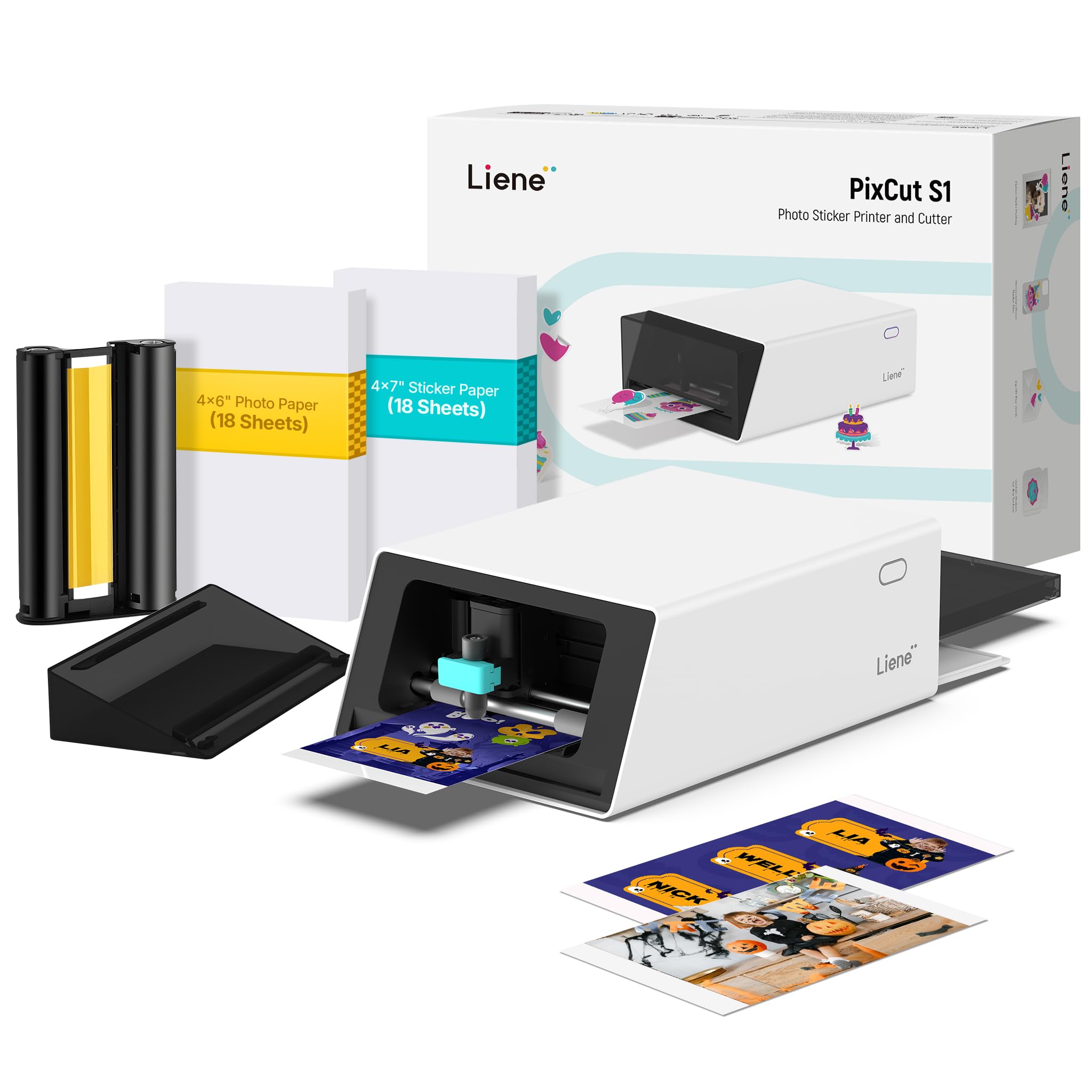
700+ ratings
Read Amazon ReviewsLiene PixCut S1
A fit for crafters who want to print and cut colorful custom stickers from a phone, tablet, or desktop.
- Combines thermal dye-sublimation color printing and die cutting in one device.
- Prints at 300 dpi and supports color output described as 16.7 million colors.
- Uses AI image extraction to identify and cut around photo subjects.
- Automatically laminates the photo paper during its four-layer dye-sublimation printing process.

Pros
- Combines printing and cutting, reducing the number of separate devices in a sticker-making workflow.
- AI-assisted subject extraction can simplify preparing photos for custom cutouts.
Consider before buying
- The app-centered Bluetooth workflow may be less convenient for people who prefer designing and controlling projects directly on a computer.
- Before buying, check which paper and consumables are compatible and what they cost for your expected project volume.
Read the full review summary
The PixCut S1 combines color printing and die cutting in one device, with editing, printing, and cutting controlled through the Liene app over Bluetooth.
Its 300 dpi thermal dye-sublimation output, automatic lamination, and AI image extraction are aimed at users who want to make custom stickers without moving between separate machines.
The app includes a large library of images, fonts, elements, and templates, as well as an AI Lab for applying styles to photos.
That makes the printer most appealing to people who enjoy making small creative projects, labels, or personalized gifts. Consider the intended sticker sizes and ongoing material costs before choosing it for frequent or larger-format work.
The buying factors
Liene PixCut Scorecard
Editorial scores reflect listed features and buyer fit; they are not laboratory measurements or customer ratings.
Print-and-cut workflow
Printing and cutting are combined in one device, with app-based Bluetooth control.
Color print detail
The described 300 dpi dye-sublimation process is designed for detailed, colorful images.
Design tools
AI image extraction, style effects, templates, and creative assets offer several ways to start a design.
Sticker durability
Automatic lamination and the stated waterproof and scratch-resistant properties are useful for everyday sticker projects.
Device flexibility
The app is available for mobile, tablet, and desktop, while the described direct workflow uses Bluetooth from a phone.
Project range
Templates cover labels and decorative projects, though the compact printer format may not fit every crafting routine.
Key Features and Specifications of Liene PixCut
- Combines thermal dye-sublimation color printing and die cutting in one device.
- Prints at 300 dpi and supports color output described as 16.7 million colors.
- Uses AI image extraction to identify and cut around photo subjects.
- Automatically laminates the photo paper during its four-layer dye-sublimation printing process.
- Connects to the Liene app by Bluetooth for editing, printing, and cutting from a smartphone; the app is also available on tablet and desktop.
- Includes access to more than 50,000 images, fonts, and elements, plus over 10,000 templates, with no subscription described.
- Measures 11 by 7.7 by 4.1 inches and weighs 6.2 pounds.
Pros and Cons of Liene PixCut
Pros
- Combines printing and cutting, reducing the number of separate devices in a sticker-making workflow.
- AI-assisted subject extraction can simplify preparing photos for custom cutouts.
- Automatic lamination and the stated water and scratch resistance are useful for stickers meant to be handled.
- A broad in-app template and asset library can help users start projects without making every design from scratch.
Consider before buying
- The app-centered Bluetooth workflow may be less convenient for people who prefer designing and controlling projects directly on a computer.
- Before buying, check which paper and consumables are compatible and what they cost for your expected project volume.
- Its compact dimensions make it a desktop craft device; buyers needing larger-format output should confirm the working size fits their projects.
Who Should Buy Liene PixCut?
Good fit
Consider the PixCut S1 if you make custom stickers, labels, or small personalized gifts and value having printing and cutting together.
The app's AI extraction and style tools may be especially useful when your projects start with photos rather than prepared cut files.
It also makes sense for occasional crafting when a ready-made template library is more appealing than building designs from scratch.
The automatic lamination and described water- and scratch-resistant finish are practical features for stickers that will see regular handling.
Before committing, check the available paper formats and replacement-material costs against your typical project size and volume.
Also review the app workflow on the device you expect to use most, since the described direct printing and cutting process relies on Bluetooth.
Who should skip it
Look elsewhere if your main need is a larger-format printer or cutter, or if your work depends on a specific material size that you have not confirmed is supported.
It may not be the most comfortable fit if you want a computer-led production setup or plan to make stickers at a volume where consumable costs and replenishment matter more than an all-in-one hobby workflow.
How the Liene PixCut Fits a Sticker-Making Workflow
One machine for printing and cutting
Combining color printing with die cutting can simplify the path from a design to a finished sticker. It also means the device is geared toward printed craft projects rather than serving as a general-purpose cutter for unrelated materials.
Photo-led design tools
AI image extraction is intended to isolate a subject from a photo before cutting, while the AI Lab applies visual styles to uploaded images.
These tools can make photo-based projects easier to begin, but buyers should explore the app's editing options to see whether they suit the level of control their designs need.
Print finish and durability
The four-layer dye-sublimation process automatically laminates the photo paper.
The resulting stickers are described as waterproof and scratch-resistant, making that finish relevant for labels and decorations that may be handled; the product description does not specify how the stickers perform under particular exposure conditions.
Planning for materials and workspace
At 11 by 7.7 by 4.1 inches and 6.2 pounds, the unit needs a stable spot on a desk or craft table.
Check the compatible paper format and ongoing material cost before buying, especially if you expect to print often or create projects near the limits of the device's working area.
Alternatives to Liene PixCut
No alternative model is recommended here. Compare the design tools, working size, and materials that matter to your routine before choosing another option.
Is Liene PixCut Worth It?
The Liene PixCut S1 is worth considering for crafters who want an app-led way to print and cut photo-based stickers in one compact device.
Its combination of dye-sublimation color output, AI-assisted design tools, and automatic lamination is well matched to labels, small gifts, and personal craft projects.
The buying decision depends on whether its workflow and materials fit your projects: confirm compatible paper, working size, and replenishment costs before purchase. For larger-format or computer-centered production, this compact, Bluetooth-oriented setup may be a less suitable choice.
Your review at a glance
700+ ratings
Read Amazon ReviewsLiene PixCut S1
A fit for crafters who want to print and cut colorful custom stickers from a phone, tablet, or desktop.
- Combines thermal dye-sublimation color printing and die cutting in one device.
- Prints at 300 dpi and supports color output described as 16.7 million colors.
- Uses AI image extraction to identify and cut around photo subjects.
- Automatically laminates the photo paper during its four-layer dye-sublimation printing process.